
Yes — for most small service businesses a CRM is worth it once you receive regular enquiries, send quotes or rely on repeat customers. A CRM (customer relationship management system) keeps every lead, conversation, quote, job and invoice in one place, and makes automated follow-up possible. The payback comes from jobs you stop losing, customers who come back and hours of admin you no longer do by hand.
What does a CRM do for a small business?
At its simplest, a CRM is a shared record of every customer and every interaction. In practice, for a service business, it does four jobs:
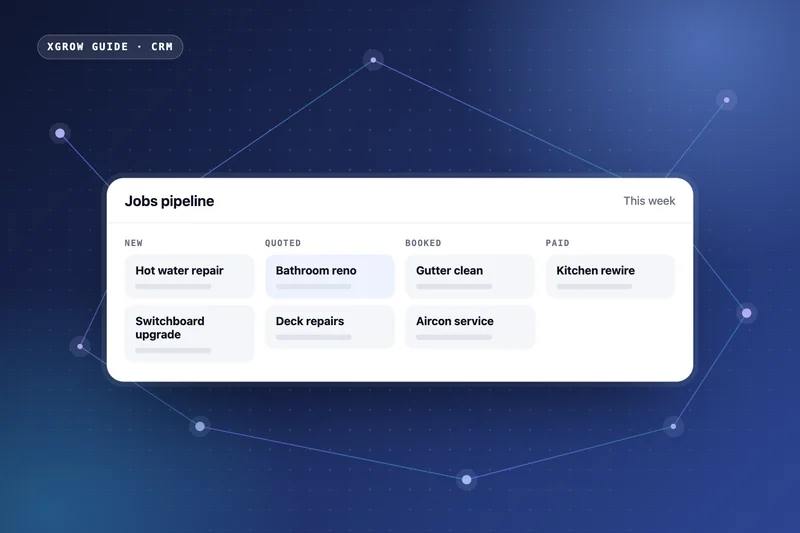
- Captures leads from your website, phone, social media and email into one pipeline.
- Organises the sales process so you can see every open quote and what needs to happen next.
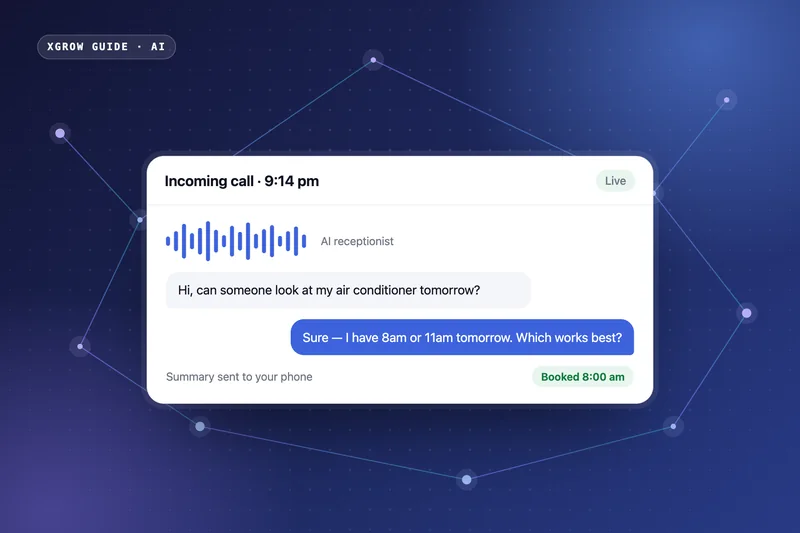
- Automates follow-up — instant replies, quote reminders, booking confirmations, review requests.
- Brings customers back with rebooking reminders and targeted campaigns.
Seven signs you need a CRM
- You have lost a job because you forgot to call someone back.
- Quotes go out and you rarely follow them up.
- Customer details live in your phone, your inbox and a spreadsheet.
- You don't know how many enquiries you got last month, or where they came from.
- Past customers never hear from you unless they call.
- You're paying for ads but can't tell which ones produce paying customers.
- Only one person really knows what's going on — and they're flat out.
What does a CRM really cost?
| Cost | What it covers | Tip |
|---|---|---|
| Software | Monthly subscription, usually by users and features | Buy for the next two years, not the next ten |
| Setup | Pipelines, fields, automations, integrations, data migration | The biggest driver of success |
| Training | Getting your team to use it daily | Short, role-based sessions beat long demos |
| Ongoing | Updates as services, prices and people change | Budget for optimisation, not just support |
How to calculate CRM ROI
Use your own numbers. Here is an illustrative example for a service business:
- 40 enquiries a month, an average job value of $450 and a 30% win rate = 12 jobs.
- Faster replies and consistent quote follow-up lift the win rate to 36% = 14.4 jobs.
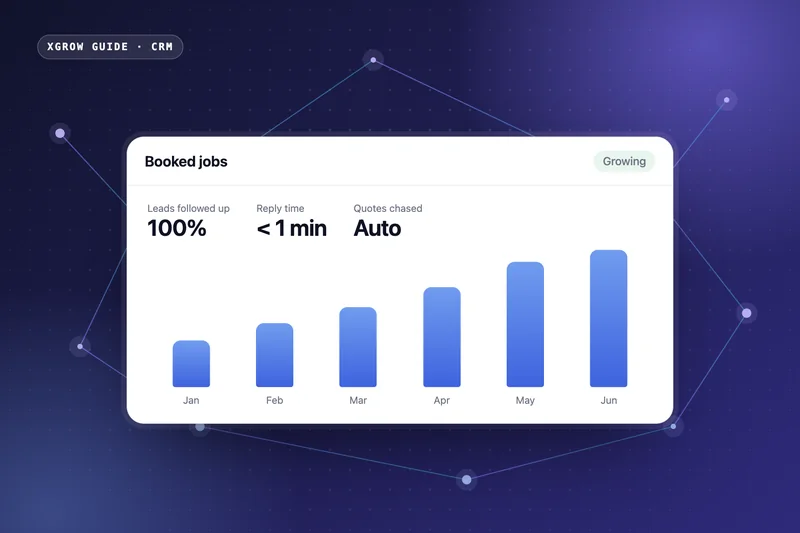
- That is 2.4 extra jobs, or about $1,080 extra revenue a month — before counting repeat bookings and admin time saved.
The lift comes mostly from speed and consistency. A Harvard Business Review study of online leads found that firms responding within an hour were nearly seven times as likely to qualify a lead as those that responded later. A CRM with automation responds in seconds, every time.
Why your CRM is the engine of your marketing
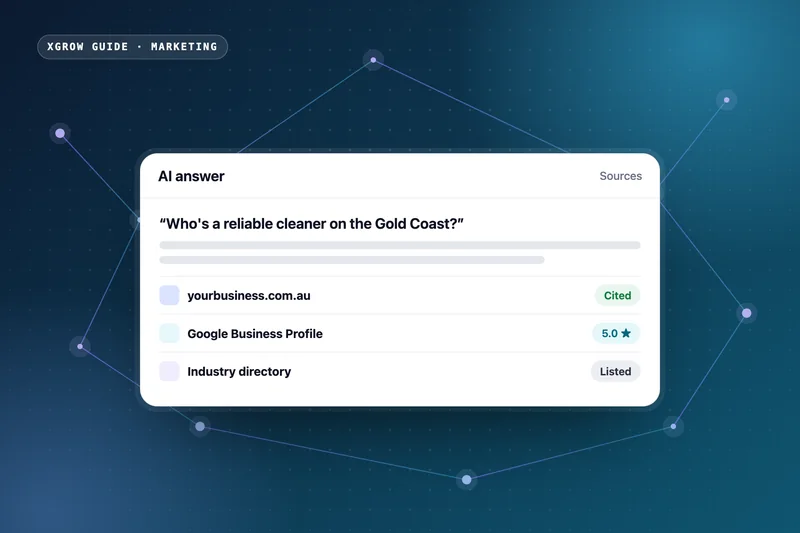
Many Australian businesses spend on ads, SEO and social media while leads land in an unmonitored inbox. That is like filling a bucket with a hole in it. The CRM is where marketing turns into revenue: it responds to the enquiry, nurtures people who aren't ready, prompts the review that wins the next customer and invites past customers back. It also tells you which marketing works, because every lead is tagged with its source. Fix the CRM first and every marketing dollar works harder — which is why XGROW connects ads and SEO directly to marketing automation.
Why CRM projects fail — and how to avoid it
- Generic setup. Out-of-the-box pipelines rarely match how your jobs flow. Configure it around your process.
- Dirty data. Importing duplicates and old junk makes the CRM untrustworthy from day one.
- No automation. If the CRM is just a place to type things, people stop typing.
- No training or owner. Someone has to champion it, and everyone needs to know their daily tasks.
XGROW's CRM implementation service exists to avoid exactly these failures.
Frequently asked questions
Do I need a CRM if I'm a one-person business?
Often yes. Solo operators benefit most from automation, because there is nobody else to answer enquiries, chase quotes or send reminders while you're working.
Can't I just use a spreadsheet?
A spreadsheet can store contacts, but it can't reply to a lead, follow up a quote, send a reminder or ask for a review. Those automated actions are where a CRM earns its cost.
How long before a CRM pays for itself?
Businesses with steady enquiries often see an impact within the first months, as faster replies and quote follow-ups win jobs that would otherwise be lost.

Matheus Bessa is the founder of XGROW. He spent six years in marketing at Unilever Brazil and now builds CRM, marketing automation and AI systems for Australian service businesses. More about Matheus · LinkedIn